Startup Accelerators You Can Apply to Right Now (2026) | Sendpaper

If you are applying to a startup accelerator in 2026, you want the current deal terms, how long each program runs, what you actually get, and what it takes to get in. This guide is a fast breakdown of popular accelerators and founder fellowships that are actively taking applications, plus how to pick the best fit for your stage.
Y Combinator
- Deal: $500K total. $125K for 7% equity (post-money SAFE) plus $375K uncapped MFN SAFE.
- Duration: 3 months. Four cohorts per year (expanded from two starting 2025).
- Location: San Francisco (remote-friendly elements).
- What happens: Weekly partner office hours, founder dinners, group sessions. Ends with Demo Day in front of hundreds of investors. No fees charged.
- Notable graduates: Airbnb, Stripe, Dropbox, Coinbase, DoorDash, Instacart, Reddit, Twitch.
- How to apply: Online application at
ycombinator.com/apply. Short form plus 1-minute video. Teams preferred but solo founders accepted. Acceptance rate is often estimated at 1-2%. - Note: YC invests immediately upon acceptance, you do not wait for the batch to start. The $375K MFN SAFE converts at whatever terms your next investor sets.
a16z Speedrun (Andreessen Horowitz)
- Deal: $500K for 10% equity (SAFE) upfront plus $500K follow-on in your next round within 18 months (up to $1M total).
- Duration: 12 weeks, in-person in San Francisco. Two cohorts per year.
- What happens: Hands-on mentorship from a16z operators, programs on go-to-market, brand, fundraising, team building. Demo Day attended by 1,000+ investors. Companies also receive significant cloud and software credits.
- Notable graduates: Program launched 2023, still building track record.
- How to apply: Online application at
speedrun.a16z.com. No revenue required. They offer visa and relocation support through their Global Founders Program.
Sequoia Arc
- Deal: $1M upfront investment. Terms are company-specific (not a fixed equity percentage).
- Duration: 4-5 weeks (recently shortened from 8 weeks). Small cohorts of about 10 companies.
- Location: Hybrid. In-person sessions in New York or Bay Area plus remote.
- What happens: Focus on company design: customer obsession, positioning, team building, growth strategy. Founders work 1:1 with Sequoia partners and operators.
- How to apply: Open call at
sequoiacap.com/arc. Typically pre-seed and seed stage. Applications often close twice a year.
South Park Commons (SPC) Founder Fellowship
- Deal: $400K for 7% equity (SAFE) upfront plus $600K guaranteed in your next outside-led round ($1M total).
- Duration: No fixed end date. Starts with a bootcamp phase (8-10 weeks), then open-ended residency.
- Location: San Francisco, New York City, or Bangalore.
- What happens: Small cohorts with one partner for every two companies. No mandatory demo day. When you are ready to raise, SPC helps you prep and makes introductions.
- Notable graduates: Comun, Orb, Column Tax, Pulley, Doppel, Profound.
- How to apply:
southparkcommons.com/apply. Applications typically open twice a year.
Techstars
- Deal: $220K total. $20K for 5% common stock (post-money CEA) plus $200K uncapped MFN SAFE.
- Duration: 3 months. Multiple programs across cities and verticals worldwide.
- What happens: Mentor-driven, includes "Mentor Madness" early on. City-specific and industry-specific programs. Ends with Demo Day.
- Notable graduates: SendGrid, Zipline, DigitalOcean, ClassPass, Outreach.
- How to apply: Choose a program at
techstars.com/accelerators. Online application with rolling deadlines. - Note: Terms can vary by region (some Asia-Pacific programs use different structures).
500 Global
- Deal: $150K for 6% equity.
- Duration: 4 months, in-person in Silicon Valley.
- What happens: Growth and marketing focused. Curriculum covers customer discovery, go-to-market, pitch development, and fundraising. Ends with Demo Day.
- Notable graduates: Canva, Credit Karma, Talkdesk, Grab, Udemy.
- How to apply:
flagship.aplica.500.co. Working prototype or MVP is typically preferred. - Note: Some programs include a fee deducted from the investment, check current terms.
AngelPad
- Deal: $120K for about 7% total (often described as 5% common stock plus about 2% from investment).
- Duration: 10 weeks. Small cohorts of about 15 teams per batch.
- Location: NYC or SF.
- What happens: Very hands-on and metrics-driven. Two batches per year.
- How to apply:
angelpad.com.
Entrepreneur First (EF)
- Deal: Up to $250K total. $125K via post-money SAFE for 8% equity plus an optional $125K via uncapped MFN SAFE through a partner. Some locations offer an equity-free grant during the initial phase to cover living costs.
- Duration: 6 months total (FORM then LAUNCH).
- Location: Programs include London, Bangalore, and San Francisco.
- What happens: You can join without a co-founder or idea. EF helps individuals find co-founders and build a company from scratch, then invests in teams that pass the investment committee.
- Notable graduates: Tractable, Cleo, Magic Pony Technology, Aztec, Omnipresent.
- How to apply:
joinef.com.
Antler
- Deal: Varies by region. US is often described as about $200K for 8% equity with follow-on potential. Europe terms can differ and may include a stipend.
- Duration: Typically a 6-week residency, followed by an investment phase.
- Location: Global, 30+ cities.
- What happens: Similar to EF, you can join solo. Antler matches founders during the residency. Selected teams receive investment after the residency.
- Notable graduates: Airalo, Lovable.
- How to apply:
antler.co.
Seedcamp
- Deal: Often described as €100-200K for about 7-7.5% equity.
- Duration: Year-long platform support, with bi-annual Seedcamp Weeks.
- Location: Europe-first, global ambition.
- What happens: Ongoing platform and partner support beyond a short cohort. Strong for Europe-based founders.
- How to apply:
seedcamp.com.
Startup Wise Guys
- Deal: Up to €65K pre-seed for equity, with follow-on up to €300K (varies by track).
- Duration: 5-month hybrid program.
- Location: Tallinn, Estonia (HQ), with tracks across SaaS, cybersecurity, sustainability.
- How to apply:
startupwiseguys.com.
Boost VC
- Deal: Often described as $500K for 15% equity, plus housing and office space.
- Duration: 3 months. Two cohorts per year, small cohorts.
- Location: San Mateo, California.
- What happens: Deep tech focused (AI, robotics, space, biotech, climate, energy). Housing is uncommon and can be a differentiator.
- How to apply:
boost.vc/apply.
Pioneer (not active for new applicants)
Pioneer was a remote accelerator backed by well known founders and investors. It has been reported as no longer active for new applicants since 2024. If you see a program using the name, verify carefully before spending time on it.
Quick reference: Others founders often mention
These are commonly mentioned alongside accelerators, but they are often closer to direct VC or bespoke programs. Availability and terms vary.
- Pear VC: Often described as $250K-$2M SAFE plus a 12-week program and office space.
pear.vc - Greylock: Custom early-stage investments plus credits. Referral is often preferred.
greylock.com - Conviction: Often described as a $150K uncapped MFN SAFE with hands-on support.
conviction.com - Google for Startups: Equity-free programs and cloud credits, varies by region.
startup.google.com - OpenAI Converge, AI Grant: Application-based programs that change frequently. Verify on official sites.
How to pick the right accelerator
- If you have no idea and no co-founder: EF or Antler.
- If you are pre-idea but technical and want patient support: South Park Commons.
- If you want maximum brand signal and investor network: YC or a16z Speedrun.
- If you want a short intensive with strong frameworks: Sequoia Arc.
- If you are outside the US and want global options: Techstars (many cities) or Antler (many regions).
- If you are building deep tech: Boost VC.
- If you want growth and marketing focus: 500 Global.
How to use a data room during fundraising
Most accelerators will push you to talk to customers fast, then raise your next round fast. A clean fundraising workflow helps:
- Start with one investor deck link: Use document analytics to see who opened and where they spent time.
- Control access as you share wider: Add passwords, expiry, and allow lists so your deck does not spread unchecked.
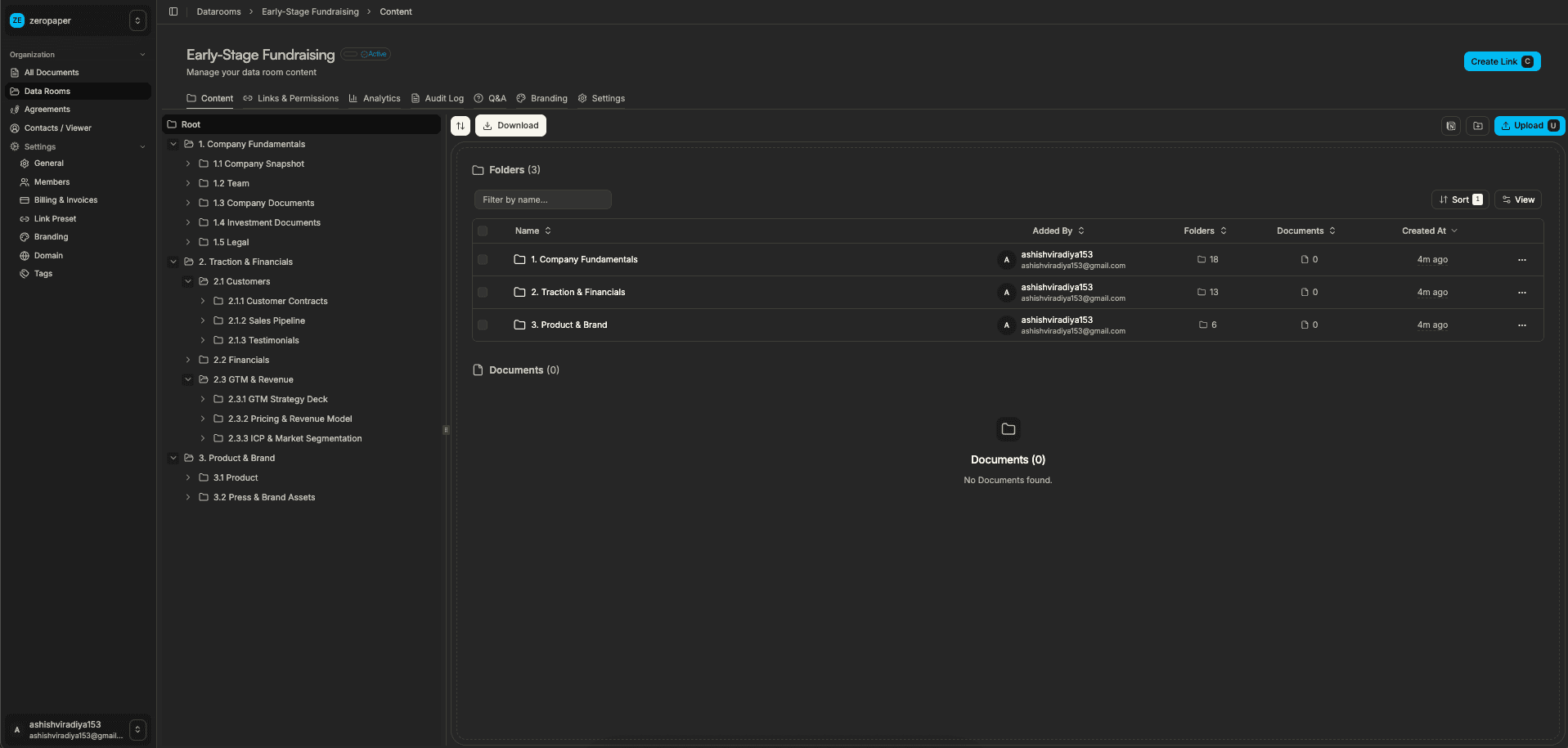
- Upgrade to a data room when diligence starts: Create a data room for financials, legal, and product docs. Add audit logs when compliance matters.
- Use one place from deck to diligence: Send investors from the deck into the data room without switching tools. See Fundraising and investor relations.
How Sendpaper helps accelerator founders
Accelerators compress your timeline. You do not just need intros, you need a clean way to share materials, track interest, and run diligence without chaos.
- Share one pitch deck link: Send one link, then use document analytics to see who opened and where they spent time.
- Add guardrails without friction: Turn on access control like password, expiry, and allow lists, so your deck stays with the right people.
- Move from deck to diligence fast: When investors ask for more, create a data room and keep everything structured by folder, instead of email threads.
- Stay compliant when it matters: Use audit logs for a clear record of access during diligence.
Related posts
- Product, GuidesData Room Groups: One Place for Permissions and Analytics | SendpaperUse data room groups in Sendpaper to manage permissions and analytics for investors, buyers, and teams. Create a group once, reuse it on links, and see group-level activity without spreadsheets.
- Product, GuidesHow Sendpaper renders files as images in the viewer (and why it matters) | SendpaperLearn how Sendpaper converts uploaded PDFs into page images for a fast, consistent viewer. We cover what formats can be shown, what processing means, and why a loader appears.
- Product, SecuritySecure PDF Document Sharing: Watermarking, Screenshot Protection, View-Only | SendpaperShare PDFs securely with watermarking, screenshot protection, view-only, and one-click agreement. Password and access control in Share Link and Access Control. One sidebar, all options.